
Best Belt Squat Machine for Gyms
A belt squat can either become the most fought-over machine on your floor or the one that looked great in the catalog and never quite delivered. The difference usually comes down to feel under load, not marketing copy. If you are looking for the best belt squat machine for gyms, you need to judge it like a serious piece of commercial equipment - by biomechanics, build quality, training versatility, and how it holds up when strong people hammer it every day.
For gym owners and strength-focused facility operators, the belt squat solves a very specific problem. It lets athletes and lifters train the squat pattern hard without loading the spine the way a barbell does. That matters for team settings, bodybuilding environments, rehab-adjacent training, and high-volume lower-body work where fatigue management is part of the program. But not every belt squat machine earns its footprint.
What makes the best belt squat machine for gyms?
The first thing to get right is the strength curve. A belt squat should feel natural through the entire rep, not awkward at the bottom and dead at the top. Machines with poor lever geometry or sloppy cable travel tend to pull the athlete out of position. Instead of a stable squat, the user starts fighting the machine. That is a fast way to turn a premium category into a disappointing one.
A serious commercial belt squat should keep tension where you want it while allowing lifters of different heights to find a strong, repeatable position. Foot platform size matters more than many buyers expect. A cramped platform limits stance options and makes the machine less useful for bodybuilders, athletes, and general members who all squat a little differently. A larger, well-positioned platform gives the machine range. That range is what keeps a specialty piece relevant year after year.
Build quality is the next separator. In a real gym, this machine will get loaded hard, dropped into, stepped on, and adjusted by users who are not gentle. Thin steel, unstable frames, weak pivots, and cheap finish work show up quickly in commercial use. The best belt squat machine for gyms feels planted when heavy weight moves. It does not rock, twist, or rattle. It feels like a machine built for war, not showroom photos.
Biomechanics matter more than specs on paper
A spec sheet can tell you the dimensions, the weight horn count, and whether the machine is plate-loaded or cable-based. It cannot tell you whether the machine actually squats well. That is where serious buyers need to stay sharp.
A good belt squat should let the user sit down between the hips, keep the torso where it belongs, and drive through the floor without getting yanked forward. If the line of pull is wrong, users start compensating. Knees drift, hips shift, and the movement turns into something between a squat and a hinge. That may still create fatigue, but it is not the same as delivering clean lower-body training with repeatable mechanics.
This is why premium manufacturing matters. Better machines are designed around movement first, then built to survive abuse. That order matters. Plenty of equipment is overbuilt and still poorly engineered. Heavy steel does not fix bad mechanics.
Belt squat machine types and their trade-offs
There is no single design that wins for every facility. It depends on who trains in your gym and how often the machine will be used.
Lever-arm belt squats often deliver a direct, aggressive feel that appeals to serious lifters. When the pivot and platform geometry are right, they can feel brutally effective and mechanically honest. The trade-off is that some lever designs can create a more fixed path, which not every user loves.
Cable or pulley-based belt squats usually offer a smoother travel pattern and can be friendlier across a wider range of body types. In commercial settings, that can be a major advantage. The downside is that lower-end cable systems often lose the heavy, planted feel advanced users want. If the pulleys, carriage, or loading system are not built to high standards, the machine can feel soft under serious load.
Standalone belt squat machines usually make the most sense for gyms that want a dedicated lower-body station with maximum stability and visual impact. Rack attachments save space, but they rarely match the experience of a purpose-built commercial unit. If your facility is built around premium strength equipment, compromise tends to stand out fast.
How to choose the best belt squat machine for your gym
Start with your member profile. If your gym serves powerlifters, bodybuilders, and advanced strength athletes, the machine needs to tolerate heavy loading and repeated hard sets without losing stability. If your space is a performance facility or personal training studio, ease of use and fast setup may matter just as much as maximum load capacity.
Look closely at entry and exit. This gets ignored until the machine is on the floor. A belt squat used by tired athletes after heavy work needs a practical start and stop position. If mounting the machine feels awkward or risky, usage drops. A clean handhold layout, stable platform, and sensible loading height all improve the training experience.
Adjustability should be functional, not decorative. You do not need endless moving parts. You do need a machine that accommodates different user heights, stance widths, and belt attachment points without turning every session into a setup project. In busy gyms, friction kills usage.
Footprint matters, but so does presence. Specialty lower-body equipment should earn space by delivering results and giving your facility a serious identity. Cheap machines disappear into the room. Premium machines make a statement before the first plate goes on.
Durability is where commercial buyers win or lose
In a home gym, a machine can survive despite weak details. In a busy facility, those details get exposed fast. Bushings, bearings, weld quality, platform grip, finish, and hardware retention all matter. So does how the machine handles repeated plate changes and hard eccentric loading.
A belt squat is not just another accessory piece. In many gyms, it becomes a high-traffic station because it works for leg days, deload phases, accessory volume, and lifters training around back issues. That means the best machine is the one that still feels tight after thousands of reps, not the one that looked cheapest at purchase.
This is where premium, custom-oriented manufacturers separate themselves from mass-market equipment. Better steelwork, cleaner fabrication, stronger pivots, and higher-end finishing are not vanity features. They protect performance over time. Serious gyms know that replacing weak equipment is more expensive than buying the right machine once.
The features that actually matter on the gym floor
Load capacity matters, but only if the machine stays smooth and stable when pushed. Belt compatibility matters because users hate fighting awkward attachment systems. Platform size matters because stance freedom changes who can use the machine well. Handle placement matters because it affects setup confidence and bracing.
Customization can matter too, especially for gyms building a branded, top-tier strength floor. Colorways, upholstery choices, and machine presence are not just cosmetic if your business depends on standing out in a crowded market. For premium facilities, the machine has to perform and look like it belongs in an elite environment.
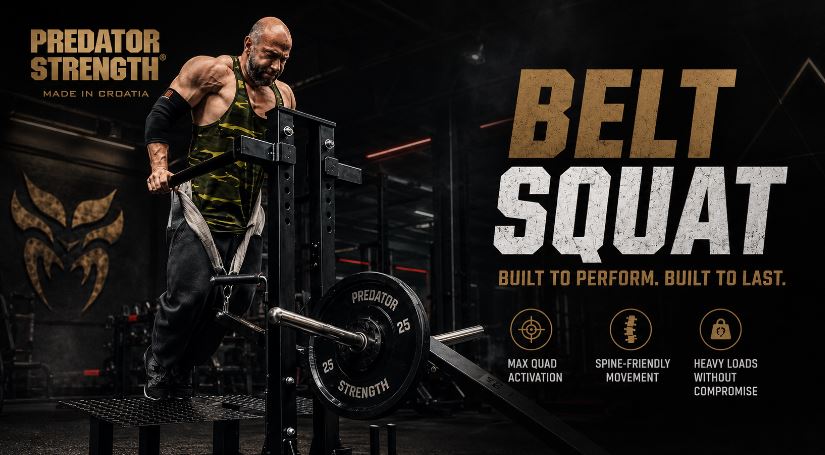
One mention is enough here: that is exactly why companies like Predator Strength have built demand around high-end, custom-made lower-body machines designed for hard commercial use rather than average-box-gym expectations.
Who should invest in a premium belt squat?
If your gym is built around serious training, a premium belt squat is not a luxury piece. It is a strategic one. It gives your members another way to train legs hard, reduces dependence on spinal loading, and broadens the usefulness of your lower-body area. It also signals that your facility understands strength training beyond the basics.
VIDEO of belt squat Predator Strength Belt Squat in Czech Republic
If you run a general fitness gym with limited space and a broad beginner population, the answer is more conditional. A belt squat can still add value, but only if the machine is intuitive enough to get regular use. In that setting, user friendliness may outweigh the more aggressive feel advanced lifters chase.
The best belt squat machine for gyms is the one that fits your clientele, survives your traffic, and delivers a squat pattern that feels right under pressure. That means buying with standards, not shortcuts. When a machine is this specialized, every flaw gets exposed under load - and every smart design choice gets rewarded rep after rep.
Choose the piece your strongest members will respect, your coaches will trust, and your floor will still be proud to show off five years from now.