
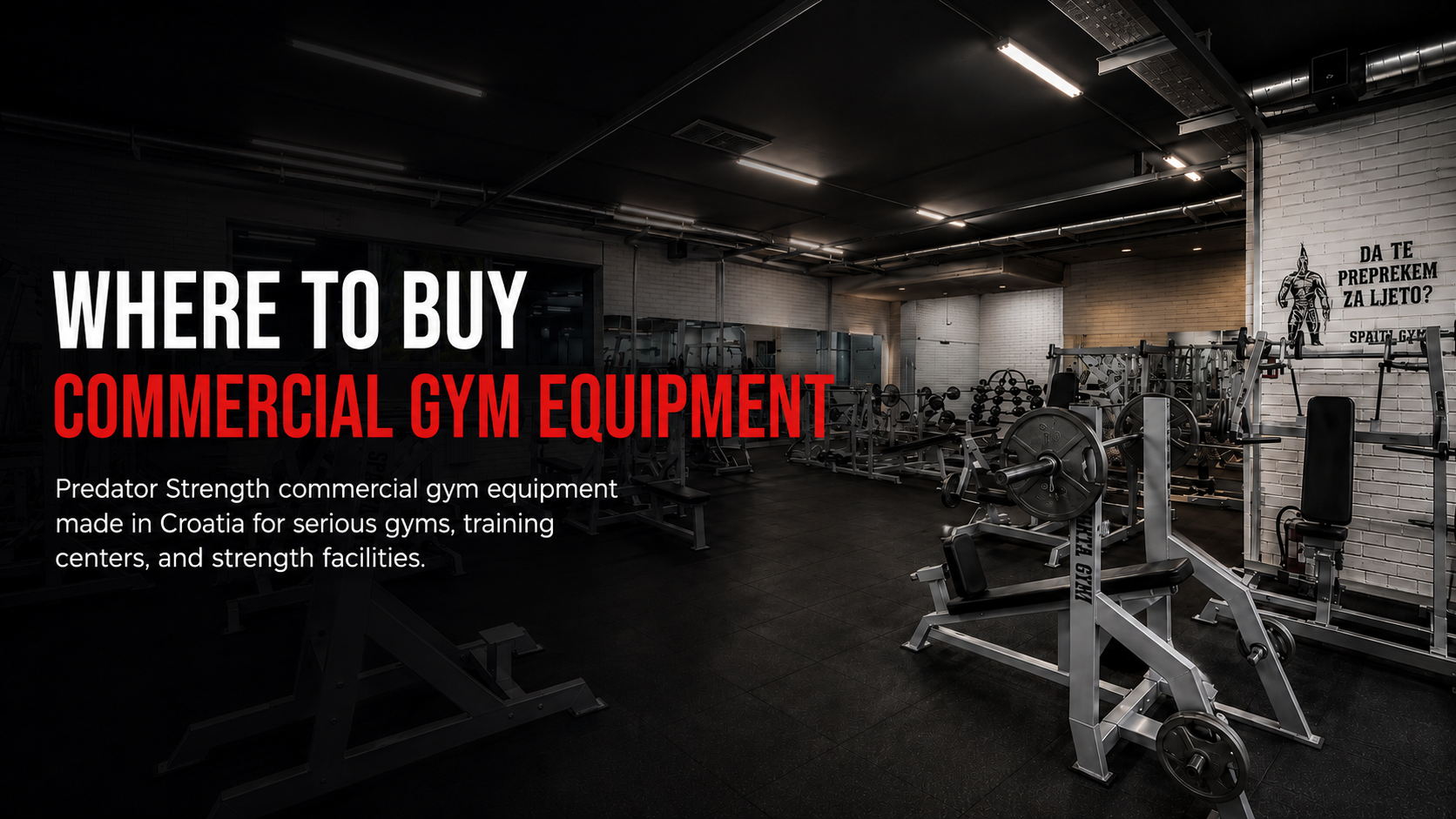
Where to Buy Commercial Gym Equipment
If you are asking where to buy commercial gym equipment, you are probably already past the beginner stage. You are not looking for flimsy selectorized pieces with soft tolerances and generic movement paths. You are building a facility that needs to perform under real load, real traffic, and real scrutiny from lifters who know the difference the second they touch the machine.
That changes the buying process completely. Commercial equipment is not one market. It is several markets hiding under the same label. A budget apartment gym, a big-box fitness chain, a private training studio, and a hardcore strength facility may all shop under the banner of commercial gear, but they should not be buying from the same type of supplier.
Where to buy commercial gym equipment depends on your facility
The first mistake buyers make is assuming the best place to purchase equipment is the biggest catalog. Usually, it is not. Massive distributors are built for convenience and volume. That works if you need a broad package fast and your members care more about having equipment than how it feels under pressure.
But if your business depends on serious training, machine quality becomes part of your brand. Lifters notice footplate angles, resistance curves, pad density, frame rigidity, and how stable a unit feels near failure. Coaches notice whether athletes can load it aggressively without the machine shifting, binding, or wearing out in a year.
That is why the right answer depends on what kind of room you are building.
For general fitness spaces, large commercial dealers may be enough. For strength-focused gyms, bodybuilding facilities, and high-end private studios, specialized manufacturers are usually the better move. They tend to offer stronger biomechanics, heavier-duty construction, and more distinctive equipment choices. They also understand that a belt squat, pendulum squat, or plate-loaded row is not a side item. It is a centerpiece.
The main places buyers purchase from
Most commercial buyers end up sourcing equipment from one of four channels. Each has trade-offs.
Large fitness distributors offer convenience, financing options, and package deals. If you need cardio, racks, dumbbells, flooring, and cable stations from one source, that simplicity can help. The downside is that many distributors sell broad lines built for the middle of the market. You get acceptable equipment, not exceptional equipment.
Direct-from-manufacturer buying is usually the strongest route when performance matters. You are closer to the people who designed the machine, understand the build quality, and can speak clearly about material upgrades, customization, lead times, and shipping. This matters even more when you are buying advanced strength pieces instead of standard utility items.
Used equipment dealers can make sense for budget-driven builds or secondary pieces. A used GHD, rack, or dumbbell set may be perfectly fine. But this route gets riskier with specialized machines. Wear patterns, upholstery damage, outdated mechanics, and missing parts can turn a cheap buy into an expensive problem.
Importing from overseas manufacturers can also be a smart move if the supplier is proven. This is where serious buyers can access premium engineering and unique machine designs that stand out from domestic commodity lines. The catch is that you need a manufacturer with real export experience, clear communication, and equipment worth the freight.
What separates a serious supplier from a reseller
If you are comparing options and wondering where to buy commercial gym equipment without getting burned, stop looking at the logo first and start looking at the product truth.
A serious supplier can explain why a machine is built the way it is. They can talk about pivot placement, loading mechanics, steel thickness, finish quality, upholstery standards, and the intended training stimulus. They do not hide behind vague claims about premium quality. They can tell you exactly why their hack squat feels different, why their hip thrust setup is more stable, or why their row machine tracks the way it does.
A reseller, on the other hand, often knows pricing better than product. That is not always a dealbreaker, but it becomes one when you are investing in machines that will define your facility.
You also want to know whether the company actually builds equipment or simply rebrands imported inventory. There is nothing inherently wrong with sourcing globally, but there is a major difference between engineered manufacturing and catalog swapping. One gives you control, consistency, and product identity. The other gives you a container of sameness.
What to look for before you buy
Heavy use is the baseline. True commercial equipment should survive repeated abuse, not just moderate member traffic. Weld quality, structural integrity, hardware selection, pad durability, and finish quality all matter. So does the way the machine ages. Some pieces look impressive on delivery and loose after six months. Others keep their feel for years.
Biomechanics matter just as much as durability. A machine can be overbuilt and still be wrong. If the movement path feels unnatural, the setup is awkward, or the resistance profile falls apart where it should be strongest, durability will not save it. Your members may use it once, then ignore it forever.
Customization is another major buying factor for premium spaces. Color, upholstery, branding, dimensions, and even specific design details can shape how your gym is perceived. If your facility is trying to stand out, generic black-and-silver equipment may not get you there.
Then there is product mix. Some suppliers are fine for standard pieces but weak on specialized lower-body and posterior-chain equipment. If your audience is strength-driven, that gap matters. A facility with a serious training identity needs more than a leg press and a cable stack.
Buying premium equipment means asking harder questions
Before placing a large order, ask how the equipment is manufactured, not just where it ships from. Ask what the lead time looks like for custom builds. Ask what support is available if a part is damaged in transit. Ask whether the supplier has experience exporting into the US and handling the realities of international commercial orders.
You should also ask for close-up details, not just polished showroom photos. Look at welds, upholstery seams, adjustment mechanisms, handles, footplates, and loading horns. Good equipment usually holds up under scrutiny. Weak equipment needs distance and lighting.
If possible, prioritize suppliers with a clear identity in strength training instead of companies trying to be everything to everyone. The best machine makers usually have a point of view. They know who the equipment is for and what kind of training environment it belongs in.
Why direct-to-manufacturer is gaining ground
More serious gym owners are moving away from middlemen because the old model does not always serve high-performance facilities well. When you buy direct from a specialist manufacturer, you usually get better control over finish options, stronger product knowledge, and access to equipment that does not look like every other floor in your city.
That matters commercially. Members talk. Coaches notice. Serious lifters post the machines that hit differently. Distinctive equipment becomes part of your marketing whether you planned for it or not.
This is especially true with niche strength pieces. A well-built belt squat, pendulum squat, T-bar row, cable hyperextension, or hip thrust machine can separate your gym from every room still packed with commodity equipment and recycled layouts. Premium manufacturers in this space tend to compete on feel, design, and build quality instead of racing to the bottom on price.
Predator Strength sits in that category - a premium direct-to-consumer manufacturer built for serious facilities that want custom strength machines with aggressive design, elite biomechanics, and true commercial durability.
Where to buy commercial gym equipment without overpaying for the wrong things
Paying less upfront is not the same as spending less. Cheap commercial equipment often costs more over time through repairs, poor member retention, early replacement, and the hidden cost of owning pieces nobody wants to use.
At the same time, not every facility needs the most expensive version of every product. It depends on your business model. If you run a bodybuilding gym, lower-body machines and plate-loaded specialty pieces may deserve the biggest share of your budget. If you operate a performance studio, your priority may be racks, benches, platforms, and a few standout accessory machines. If you are building a private training space, fewer pieces with stronger identity may outperform a bigger but forgettable mix.
The smart move is not to buy everything from one price tier. It is to spend aggressively where machine feel, durability, and brand perception matter most, then stay practical on commodity items.
The right supplier understands that distinction. They will not push you into a bloated package just to increase order value. They will help you build a floor that trains hard, lasts long, and looks like it belongs to a serious operation.
When you are deciding where to buy commercial gym equipment, buy from people who respect the difference between equipment that fills space and equipment that builds reputation. Your members will feel it on day one, and your business will keep feeling it long after the invoice is paid.